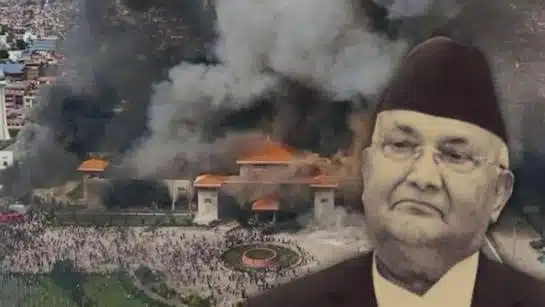
Prime Minister KP Sharma Oli stepped down from his position on Tuesday afternoon, his office confirmed. The resignation followed two days of mass demonstrations in Kathmandu, largely driven by youth-led movements demanding action against corruption, greater freedoms, and an end to what they called the government’s heavy-handed policing.
Protests Turn Violent
On Monday, tensions escalated dramatically when protesters clashed with security forces near the Federal Parliament and several other key locations in the capital.
The violence resulted in 19 fatalities and left more than 500 people injured, marking one of the deadliest outbreaks of unrest in Nepal in recent years.
Despite the government’s imposition of curfews across the Kathmandu Valley and the deployment of a strong security presence, demonstrations only continued to grow in momentum, intensifying pressure on Oli’s administration.
Oli’s Statement in Resignation Letter
In his formal resignation letter submitted to President Ramchandra Paudel, Oli acknowledged the extraordinary challenges facing Nepal.
He stated:
“The nation is going through extraordinary circumstances. To overcome this crisis, Nepal urgently requires both a constitutional and political solution.”
His remarks signaled recognition that public discontent had reached a tipping point, making it difficult for his government to continue.
Political and Social Impact
Oli’s resignation is expected to set the stage for significant political realignments in Nepal. The crisis has also underscored widespread frustrations among young people, many of whom accuse the government of failing to address economic struggles, corruption, and limits on civil liberties.
Observers say Nepal now faces a critical moment, as leaders seek to restore calm while addressing the underlying grievances that fueled the protests.
Tags:
Subscribe To Get Update Latest Blog Post
No Credit Card Required